

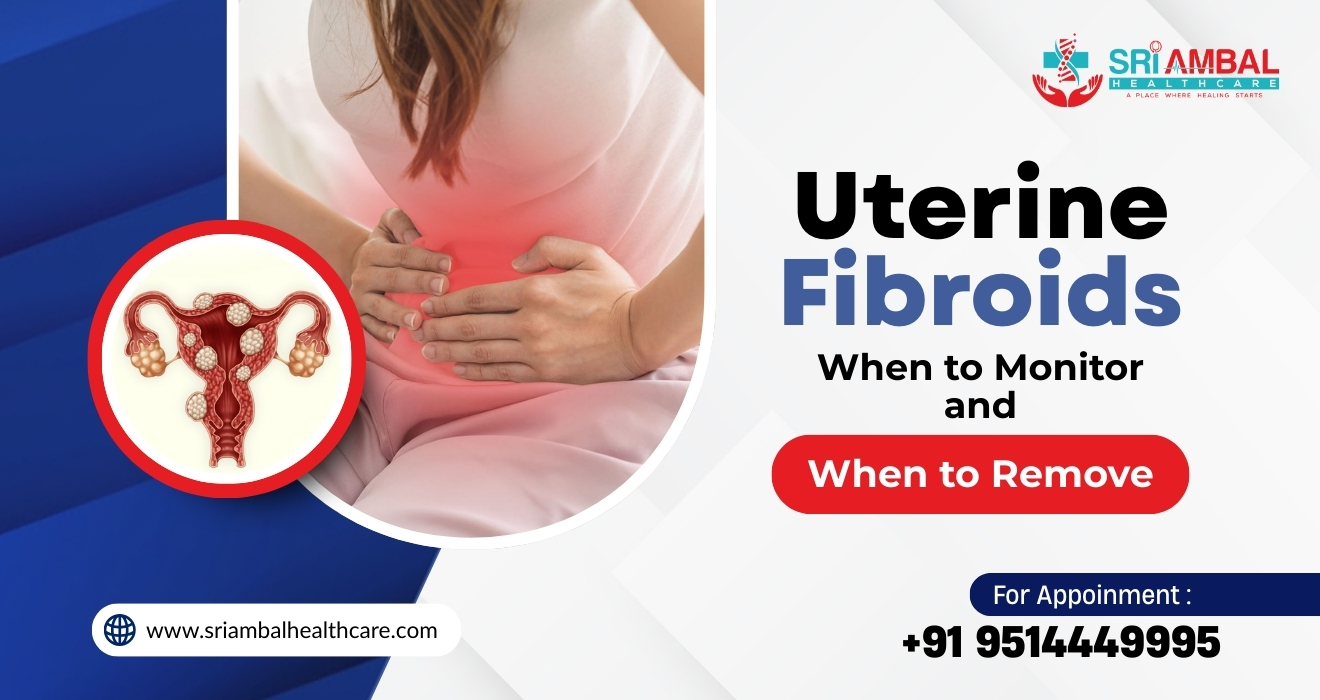
Uterine Fibroids: When to Monitor and When to Remove
Introduction
Uterine fibroids are a common health condition affecting women, especially during the reproductive years. Many women live with fibroids without knowing they have them, while others experience symptoms that affect daily life. Understanding when fibroids can be safely monitored and when treatment or removal is needed is important for making informed health decisions.
This blog explains uterine fibroids in simple terms, including symptoms, causes, and available options for uterine fibroid treatment, helping you understand when medical care may be necessary.
What Exactly Are Uterine Fibroids?
Uterine fibroids are non-cancerous growths that develop in or around the uterus. They are also known as leiomyomas or myomas. Fibroids are very common during a woman’s reproductive years, and many women may have them without noticeable symptoms.
These growths vary in size and number. Some fibroids are as small as a pea, while others can grow large enough to change the shape of the uterus. A woman may have one fibroid or multiple at the same time.
Fibroids can form in different areas of the uterus, and their location often influences the symptoms they cause.
Types of Uterine Fibroids
- Subserosal fibroids grow on the outer surface of the uterus. They may become large before causing symptoms and can press on nearby organs.
- Intramural fibroids develop within the muscular wall of the uterus. This is the most common type and often causes heavy menstrual bleeding and pelvic pain.
- Submucosal fibroids grow into the uterine cavity. Even small submucosal fibroids can lead to heavy bleeding and fertility issues.
Symptoms of Uterine Fibroids
Not all fibroids cause symptoms. Many women have fibroids without any noticeable signs. However, when symptoms occur, they may include:
- Heavy or prolonged menstrual bleeding
- Pelvic pain or pressure
- Frequent urination
- Constipation
- Lower back pain
- Pain during intercourse
In some cases, fibroids may affect fertility or pregnancy, depending on their size and location.
Common Causes and Risk Factors
- Hormonal changes, especially estrogen and progesterone, can trigger fibroid growth during reproductive years.
- Family history matters—women with close relatives who had fibroids face a higher risk.
- Lifestyle factors like obesity, early periods, and low physical activity may increase fibroid risk.
When Is Monitoring Fibroids the Right Choice?
- Small fibroids without symptoms can be safely monitored through regular checkups instead of immediate treatment.
- Mild or manageable symptoms often allow doctors to recommend observation rather than active medical intervention.
- Fibroids near menopause may shrink naturally as hormone levels fall, making monitoring a practical option.
- Stable fibroid size over time suggests monitoring is safe, provided symptoms do not worsen or new issues develop.
When Fibroids May Need Treatment or Removal?
- Heavy bleeding or anaemia caused by fibroids can lead to weakness and fatigue, requiring care from the Best fibroid removal doctors in Chennai.
- Persistent pelvic pain, pressure, or fertility concerns may indicate the need for treatment when fibroids affect daily life or pregnancy plans.
- Rapid fibroid growth needs timely evaluation by experienced specialists to choose the safest and most effective treatment approach.
Treatment Options Available Today
- Medications help control pain and heavy bleeding linked to fibroids, but they do not remove fibroids permanently.
- Uterine fibroid embolization (UFE) reduces blood flow to fibroids, causing them to shrink while preserving the uterus.
- Myomectomy surgically removes fibroids and keeps the uterus intact, making it suitable for women planning future pregnancy.
- Hysterectomy removes the uterus completely and is considered when symptoms are severe and childbearing is complete.
Conclusion
Uterine fibroids are common and, in many cases, easy to manage. Some fibroids don’t need treatment, but symptoms like heavy bleeding, pain, or fertility problems should always be addressed. Getting timely medical advice makes a big difference.
Choosing the best uterine fibroid treatment hospitals in Chennai ensures that women receive accurate diagnoses, appropriate monitoring, and safe treatment options. With early care and regular follow-ups, women can protect their health, comfort, and future fertility.