
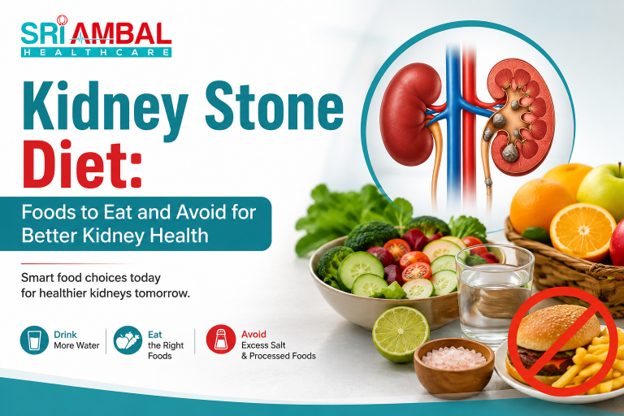
Kidney Stone Diet: Foods to Eat and Avoid for Better Kidney Health
Kidney stones can be painful, but dealing with them does not have to stop after treatment. If you have had a kidney stone once, you may naturally wonder, “What should I eat so that it does not happen again?”
The food and drinks you choose every day can play an important role in maintaining good kidney health. Drinking enough water, eating balanced meals and being careful with certain foods may help reduce the chances of developing kidney stones again.
At Sri Ambal Hospital, patients often seek guidance on managing kidney stone problems and making better lifestyle choices for their kidney health. While diet alone may not prevent every kidney stone, healthy everyday habits can support long-term kidney health and help reduce certain risk factors.
But there is no single diet that works for everyone. The right food choices can depend on why you developed kidney stones in the first place. So, instead of completely avoiding different foods, it is better to understand which habits can support your kidneys and which ones may increase your risk.
What Exactly Are Kidney Stones?
Kidney stones are hard deposits that develop inside the kidneys. They can be very small, like grains of sand, or grow much larger.
They form when certain substances present in urine become concentrated and join together. A person may not notice a stone when it is small. But when it moves into the urinary tract, it can cause pain, discomfort and difficulty while passing urine.
Several factors can increase the chance of developing kidney stones. Not drinking enough water, eating too much salty food, having an unbalanced diet and certain health conditions can all contribute.
Your daily habits therefore matter when it comes to kidney stone prevention.
How Does Your Diet Affect Kidney Stones?
Think of your kidneys as a natural filtering system. Every day, they filter waste and extra substances from your blood and remove them through urine.
When you do not drink enough water, your urine becomes more concentrated. When certain substances are present in high amounts, they can come together and form crystals. Over time, these crystals can become stones.
This is why your kidney stone diet should not be about following complicated rules. It should mainly focus on good hydration, balanced meals and avoiding excessive amounts of certain foods.
Foods and Drinks That Can Support Kidney Health
1. Make Water Your First Choice
If there is one habit you should pay attention to, it is drinking enough water.
Many people remember to drink water only when they feel thirsty. By then, they may already be mildly dehydrated.
Keep water with you throughout the day and make drinking water a regular habit. This becomes even more important when you are outdoors, exercising or spending time in hot weather.
Instead of drinking a large amount of water only once or twice a day, try to drink fluids regularly.
If you have been advised to restrict your fluid intake because of another medical condition, follow your doctor’s recommendation.
2. Include Fresh Fruits and Vegetables
Fresh fruits and vegetables can be part of a healthy diet for people concerned about kidney stones.
They add variety to your meals and provide water, fibre and important nutrients.
- Cucumber
- Watermelon
- Oranges
- Lemon
- Guava
- Carrots
- Tomatoes
- Other seasonal fruits and vegetables
You do not need to depend on one particular fruit to protect your kidneys. A variety of foods is a better approach.
3. Do Not Remove Calcium From Your Diet Without Advice
Some people think that because certain kidney stones contain calcium, they should stop eating calcium-rich foods.
That is not necessarily the right approach.
Foods such as milk, curd and other calcium-containing foods can be part of a balanced diet. Completely removing calcium without professional advice may not be helpful.
If you have previously had kidney stones, speak to your doctor before making major changes to your diet or taking calcium supplements.
Foods to Limit When You Are Prone to Kidney Stones
1. Cut Down on Excess Salt
Salt is present in many foods we eat every day. The problem is that we may not always realise how much we are consuming.
Chips, packaged snacks, instant noodles, processed foods, pickles and restaurant foods can contain considerable amounts of salt.
Instead of adding extra salt to your meals, try using natural ingredients such as herbs, spices, lemon or other flavouring options.
Reducing excess salt is a simple change that can make your overall diet healthier.
2. Be Careful With Processed and Packaged Foods
Convenience foods can make life easier, especially on busy days. But eating them too frequently may mean consuming more salt, sugar and other ingredients than you realise.
Try to make fresh, home-prepared meals your regular choice whenever possible.
You do not have to completely stop eating packaged foods. The idea is simply to avoid making them a major part of your everyday diet.
3. Avoid Excessive Meat and High-Protein Diets
Protein is an important part of a healthy diet. However, eating very large amounts of meat or following a high-protein diet without professional guidance may not be suitable for everyone with a history of kidney stones.
If you regularly eat large portions of meat, discuss your diet with a healthcare professional, particularly if you have had kidney stones more than once.
The goal is balance, not complete avoidance.
4. Do Not Follow Extreme Food Restrictions
The internet is full of lists saying that people with kidney stones should completely avoid certain fruits, vegetables, milk or other foods.
Be careful with such advice.
Kidney stones can have different causes, and the same food may not affect every person in the same way. Removing many nutritious foods from your diet without knowing what is actually causing your stones can make your diet unnecessarily restrictive.
At Sri Ambal Hospital, proper medical evaluation can help patients understand their kidney stone condition and make informed decisions about dietary and lifestyle changes.
What Should You Eat After Having a Kidney Stone?
If you have already had a kidney stone, think about your everyday routine rather than looking for one “miracle” food.
A simple approach could be:
- Morning: Start your day with water and a balanced breakfast.
- Afternoon: Continue drinking water regularly and include vegetables and fresh foods with your meals.
- Evening: Choose a balanced dinner rather than a very salty or heavily processed meal.
- Throughout the day: Keep water nearby, particularly when travelling or spending time outside.
These small habits are easier to maintain than following a complicated diet for a few weeks and then returning to old habits.
Kidney Stone Prevention in Ambattur, Avadi and Thiruverkadu
People living in Ambattur, Avadi, Thiruverkadu and nearby areas often have busy daily routines. Long working hours, travelling and Chennai’s hot climate can sometimes make it easy to forget about hydration.
Making water a regular part of your daily routine and choosing balanced meals can be a simple starting point for better kidney health.
At Sri Ambal Hospital, patients from Ambattur, Avadi, Thiruverkadu, Ayyappakkam and nearby areas can seek medical evaluation and guidance for kidney stone-related concerns. If you have experienced kidney stones before, understanding the possible cause is important—especially when the problem keeps returning.
Along with appropriate medical evaluation, dietary and lifestyle changes can help support long-term kidney health.
When Should You Consult a Doctor?
Diet can help with prevention, but it cannot replace medical treatment when you have an active kidney stone.
You should consult a doctor if you experience symptoms such as:
- Strong pain in your side or back
- Pain that moves towards the lower abdomen
- Blood in your urine
- Pain or burning while urinating
- Difficulty passing urine
- Repeated urinary problems
- Nausea or vomiting
- Fever along with urinary symptoms
At Sri Ambal Hospital, patients experiencing kidney stone symptoms can seek timely medical evaluation. Getting checked early can help identify the problem and determine the appropriate treatment.
If kidney stones keep coming back, your doctor may also recommend further tests to understand the possible reason behind them.
Take Care of Your Kidneys With Everyday Choices
You do not need a complicated meal plan to start taking better care of your kidneys.
Drink water regularly. Eat fresh and balanced meals. Reduce excess salt and highly processed foods. Avoid extreme diets and do not remove important nutrients from your meals without professional advice.
Most importantly, if you have had kidney stones before, do not ignore repeated symptoms. A proper evaluation can help you understand the cause and choose the right approach for prevention.
At Sri Ambal Hospital, patients can seek medical guidance and treatment for kidney stone-related concerns. For people from Ambattur, Avadi, Thiruverkadu, Ayyappakkam and nearby areas, timely medical care can help in managing kidney stone problems and supporting better long-term kidney health.