

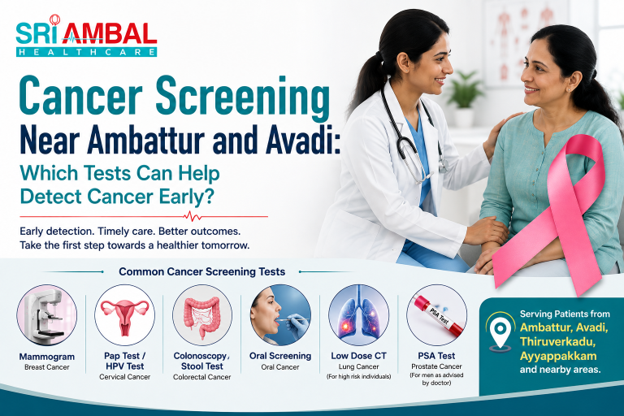
Cancer Screening Near Ambattur and Avadi: Which Tests Can Help Detect Cancer Early?
Cancer is often discussed only after a person develops noticeable symptoms. However, some types of cancer can develop silently in the early stages. By the time symptoms appear, the condition may have progressed. This is why early cancer detection is an important part of timely cancer care.
Cancer screening is designed to look for certain signs of cancer or early changes before a person develops symptoms. It does not mean that every person needs every available cancer test. The right screening depends on factors such as age, sex, family history, lifestyle and individual health risks.
At Sri Ambal Hospital, individuals from Ambattur, Avadi and nearby areas can seek medical guidance when they have concerns about cancer risk, screening or unusual symptoms. A doctor can help determine which tests may be appropriate for an individual.
What Is Cancer Screening?
Cancer screening is a way of checking for certain cancers before symptoms develop. The main purpose is to identify changes as early as possible.
However, it is important to understand that a screening test is not always the same as a final diagnosis. A screening test may show an abnormality that requires further tests. In some cases, imaging, laboratory investigations or a biopsy may be needed to understand the exact cause.
This is why cancer screening should be viewed as one part of a complete medical evaluation rather than a simple test that gives all the answers.
Who Should Consider Cancer Screening?
There is no single age at which every person should undergo every cancer screening test. A person’s screening needs can vary.
You may need to discuss cancer screening with a doctor if you:
- Have a family history of cancer
- Have a personal history of cancer
- Notice persistent or unusual changes in your body
- Have been exposed to certain cancer risk factors
- Use tobacco
- Have long-term health conditions that increase cancer risk
- Have been advised to undergo regular screening because of your age or medical history
At Sri Ambal Hospital, a doctor can discuss your individual health history and help you understand whether screening may be suitable for you.
Common Tests Used for Early Cancer Detection
1. Breast Cancer Screening
Breast cancer screening may involve a clinical examination and imaging tests. A mammogram is commonly used to look for changes in breast tissue that may not be noticeable during a physical examination.
Depending on the individual’s symptoms or risk factors, additional tests may be advised. These can include:
- Breast ultrasound
- Mammography
- Other specialised imaging tests when required
It is important to seek medical advice if you notice a lump, unusual breast pain, changes in the skin or nipple, or any other persistent change. Screening recommendations can vary based on age and personal risk.
2. Cervical Cancer Screening
Cervical cancer screening can help identify changes in the cervix that may require further attention.
Common tests may include:
- Pap test
- HPV testing
- Other follow-up tests when recommended by a doctor
These tests are especially important because abnormal changes can sometimes be identified before they develop into cancer. Regular screening recommendations depend on factors such as age and medical history.
3. Colorectal Cancer Screening
Colorectal cancer screening focuses on the large intestine and rectum. Depending on an individual’s age, symptoms and risk factors, doctors may recommend different screening methods.
Possible tests can include:
- Stool-based tests
- Colonoscopy
- Other investigations when required
A person with persistent changes in bowel habits, unexplained bleeding or other concerning symptoms should not simply assume that it is a minor digestive issue. Medical evaluation can help identify the cause.
4. Oral Cancer Screening
Oral cancer can affect the mouth, tongue, throat and nearby areas. A doctor or specialist may examine the mouth for unusual changes.
Persistent symptoms such as:
- A mouth ulcer that does not heal
- A white or red patch
- Difficulty swallowing
- A persistent lump
- Changes in the voice
should be evaluated by a doctor.
This is particularly important for people who use tobacco or have other risk factors.
5. Lung Cancer Screening
Not everyone requires screening for lung cancer. However, some people with a significant smoking history or other risk factors may be considered for specific screening tests.
A doctor can assess whether lung cancer screening is appropriate based on individual risk. This is an important example of why cancer screening should be personalised rather than choosing tests without medical guidance.
6. Prostate Cancer Evaluation
Prostate-related concerns may require a medical examination and blood tests. A PSA blood test may be considered in certain individuals, depending on age, symptoms and risk factors.
A raised PSA level does not automatically mean a person has cancer. Further medical evaluation may be needed to understand the reason for an abnormal result.
Men who experience persistent urinary symptoms or have a family history of prostate cancer should discuss their concerns with a doctor.
What Happens if a Screening Test Shows an Abnormality?
An abnormal screening result does not always mean cancer is present.
Sometimes, the result may show a change that is harmless. In other situations, the doctor may recommend additional investigations to understand the finding more clearly.
Depending on the situation, further tests may include:
- Blood tests
- Ultrasound
- X-ray
- CT scan
- MRI scan
- Endoscopy
- Biopsy
A biopsy involves examining a sample of tissue or cells to help doctors understand the nature of an abnormal area.
At Sri Ambal Hospital, further medical evaluation can be planned based on the individual’s symptoms, screening results and clinical condition.
Cancer Screening Is Not Only About Testing
Early detection also begins with paying attention to your body.
A screening test may be useful for someone without symptoms. But if you already have a persistent or unusual symptom, it is important to consult a doctor instead of waiting for your next routine screening.
Medical attention should be considered for symptoms such as:
- An unexplained lump or swelling
- Unusual bleeding
- A persistent change in bowel or bladder habits
- Unexplained weight loss
- Difficulty swallowing
- A wound or ulcer that does not heal
- A persistent cough
- Ongoing fatigue without a clear reason
- Changes in a mole or skin growth
These symptoms can have many different causes and do not automatically indicate cancer. However, persistent changes should not be ignored.
Cancer Screening Near Ambattur and Avadi: Why Early Consultation Matters
People often delay medical consultation because they are afraid of receiving a serious diagnosis. Others may wait until symptoms become more severe.
However, timely medical consultation provides an opportunity to understand what is causing a symptom and whether any further tests are needed.
For individuals looking for cancer screening near Ambattur and Avadi, the first step is often a consultation with a doctor. Based on your age, medical history, family history and symptoms, the doctor can recommend appropriate tests rather than unnecessary investigations.
At Sri Ambal Hospital, patients from Ambattur, Avadi, Thiruverkadu, Ayyappakkam and nearby areas can seek medical guidance for cancer-related concerns and timely evaluation.
Can a Healthy Lifestyle Replace Cancer Screening?
Maintaining a healthy lifestyle is important, but it does not completely replace recommended cancer screening.
Healthy habits may include:
- Avoiding tobacco
- Limiting alcohol consumption
- Maintaining a healthy weight
- Eating a balanced diet
- Staying physically active
- Attending regular medical check-ups when recommended
However, even people who follow a healthy lifestyle may develop cancer. This is why individuals with specific risk factors or recommended screening needs should speak with a healthcare professional.
When Should You Speak to a Doctor About Cancer Screening?
You may consider discussing cancer screening with a doctor if:
- You have a family history of cancer
- A close relative was diagnosed with cancer
- You have a personal history of cancer
- You have concerns about your cancer risk
- You are in an age group where certain screening may be recommended
- You have persistent or unexplained symptoms
At Sri Ambal Hospital, the healthcare team can help patients understand whether cancer screening or further medical evaluation may be appropriate.
Take a Proactive Approach to Your Health
Cancer screening is not about living in fear. It is about being aware of your health and taking action when appropriate.
Not everyone needs the same screening tests, and more testing is not always better. The most useful approach is to speak with a qualified doctor about your individual risk factors and follow recommendations based on your personal health needs.
If you are searching for cancer screening in Ambattur, cancer screening near Avadi or medical guidance in Thiruverkadu and Ayyappakkam, Sri Ambal Hospital can be a point of contact for discussing your concerns and understanding the appropriate next steps.
Early consultation can help identify the need for further evaluation, and regular medical guidance can help you make informed decisions about your health.
Internal links supplied in the source: Sri Ambal Hospital home page; Thiruverkadu hospital page; oncology/cancer screening service page.