

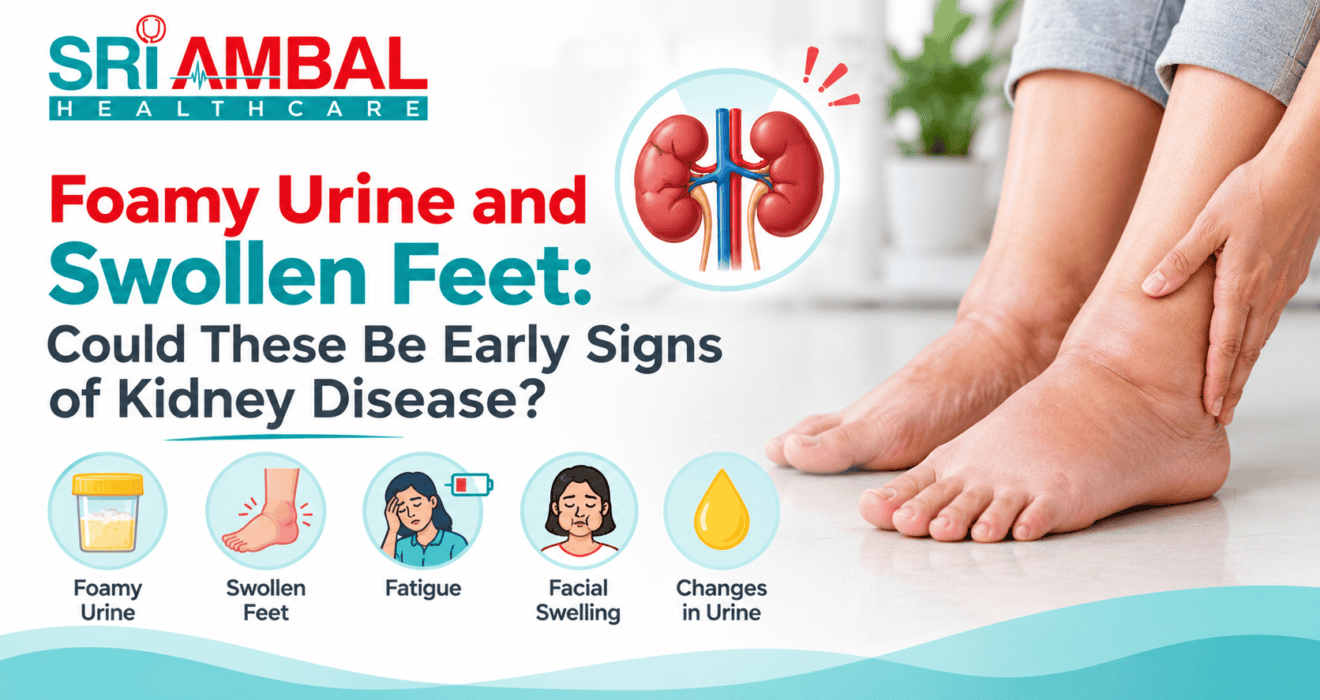
Foamy Urine and Swollen Feet: Could These Be Early Signs of Kidney Disease?
Have you noticed that your urine looks unusually foamy or that your feet and ankles appear swollen, especially towards the end of the day? These changes may seem minor, but sometimes they can indicate an underlying health problem involving the kidneys.
The kidneys play an important role in maintaining overall health. They filter waste and excess fluids from the blood, regulate minerals, help control blood pressure, and support the production of red blood cells. When kidney function is affected, waste and excess fluid may build up in the body.
Although foamy urine and swollen feet do not always indicate kidney disease, persistent or unexplained changes should not be ignored. Recognising the early signs of kidney disease and seeking medical advice can help identify potential problems before they become more serious.
For people living in Ayapakkam, Ambattur, Avadi, and nearby areas of Chennai, understanding these warning signs can help them know when to consult a kidney specialist.
Why Do Kidney Problems Develop?
Kidney problems can develop due to several health conditions and lifestyle-related factors. Diabetes and high blood pressure are among the leading causes of chronic kidney disease.
Other possible causes include:
- Long-term use of certain medications, particularly some painkillers.
- Repeated kidney infections.
- Kidney stones that cause obstruction or complications.
- Inherited kidney conditions.
- Autoimmune diseases affecting the kidneys.
- Family history of kidney disease.
Chronic kidney disease often develops gradually. In its early stages, many people may not experience noticeable symptoms. This is why regular health check-ups and appropriate blood and urine tests are important, particularly for people with diabetes, hypertension, or other risk factors.
1. Foamy Urine: Could It Be a Sign of Kidney Problems?
Occasionally noticing bubbles in your urine is usually not a reason to panic. A fast urine stream, concentrated urine due to dehydration, or toilet cleaning products can create bubbles or foam.
However, if your urine frequently appears unusually foamy or the foam does not disappear quickly, it may be worth getting it checked.
One possible reason is proteinuria, a condition in which excess protein passes into the urine. Healthy kidneys normally prevent significant amounts of protein from escaping into urine. When the kidney’s filtering units become damaged, proteins such as albumin may leak through.
Persistent foamy urine can sometimes be associated with kidney conditions, including diabetic kidney disease and other disorders affecting the kidney filters.
A urine albumin-to-creatinine ratio (UACR) test can help detect abnormal levels of albumin in urine. A doctor may also recommend additional investigations to assess kidney function.
Do not assume that every instance of foamy urine means kidney disease. The important thing is to pay attention to persistent changes and seek medical advice when necessary.
2. Swollen Feet and Ankles: Why Does It Happen?
Swelling in the feet, ankles, or legs is another symptom that may sometimes be associated with kidney problems.
When the kidneys cannot remove excess sodium and fluid effectively, fluid may accumulate in different parts of the body. This can lead to swelling, medically known as oedema.
You may notice:
- Swelling around the ankles and feet.
- Shoes feeling tighter than usual.
- Puffiness around the eyes, particularly in the morning.
- Swelling that leaves a temporary indentation when pressed.
- Unexplained weight gain due to fluid retention.
However, swollen feet can also result from prolonged standing, certain medications, circulation problems, heart conditions, or other medical issues.
If swelling is persistent, unexplained, or accompanied by changes in urination, breathlessness, or unusual tiredness, consult a healthcare professional for an evaluation.
Sudden swelling in one leg, particularly with pain or redness, or swelling accompanied by breathlessness or chest pain, requires urgent medical assessment.
3. Other Early Signs of Kidney Disease You Should Know
Kidney disease does not always produce obvious symptoms in its early stages. As the condition progresses, certain changes may become more noticeable.
Frequent or reduced urination: Changes in how often you urinate, particularly during the night, may sometimes indicate an underlying health issue.
Persistent tiredness: When kidney function declines, waste products may accumulate in the blood. Kidney disease can also contribute to anaemia, which may cause weakness and fatigue.
Loss of appetite and nausea: Some people with more advanced kidney disease experience nausea, reduced appetite, or an unpleasant taste in the mouth.
Muscle cramps: Changes in fluid and mineral balance can contribute to muscle cramps, particularly in the legs.
Difficulty concentrating: The accumulation of waste products and other complications of kidney disease may affect concentration and mental alertness.
These symptoms are not specific to kidney disease. A proper medical assessment is necessary to understand their cause.
4. Who Is at Higher Risk of Kidney Disease?
Certain health conditions and lifestyle factors can increase the risk of developing kidney problems.
You may have a higher risk if you:
- Have diabetes or consistently high blood sugar levels.
- Have high blood pressure.
- Have a family history of kidney disease.
- Have experienced repeated kidney infections.
- Have a history of kidney stones.
- Frequently use certain pain medications without medical guidance.
- Have heart disease or other conditions affecting circulation.
People with diabetes and hypertension should pay particular attention to regular kidney screening, even when they feel healthy.
Early detection can help doctors identify changes in kidney function and recommend appropriate treatment.
5. Which Tests Help Detect Kidney Problems?
If you experience persistent foamy urine, swelling, or other possible kidney-related symptoms, your doctor may recommend certain investigations.
Common tests include:
Serum Creatinine Test: Measures creatinine levels in the blood. Creatinine is a waste product that healthy kidneys normally remove.
Estimated Glomerular Filtration Rate (eGFR): Uses blood test results and other information to estimate how effectively the kidneys filter waste.
Urine Albumin-to-Creatinine Ratio (UACR): Checks whether excess albumin is leaking into the urine. It can help identify early kidney damage.
Urine Routine Examination: Helps detect protein, blood, and other abnormalities in the urine.
Ultrasound of the Kidneys: May be recommended to examine kidney size, structure, stones, or possible urinary tract obstruction.
Not everyone requires all these tests. The doctor will decide which investigations are appropriate based on symptoms, medical history, and examination findings.
6. How Can You Protect Your Kidney Health?
Healthy daily habits can support kidney function and help reduce the risk of kidney-related complications.
Here are some practical steps:
- Maintain healthy blood sugar levels if you have diabetes.
- Monitor and manage blood pressure.
- Drink sufficient water according to your health needs.
- Reduce excessive salt consumption.
- Include vegetables, fruits, and balanced meals in your diet.
- Maintain a healthy body weight.
- Stay physically active.
- Avoid taking painkillers regularly without medical advice.
- Get regular health check-ups if you have kidney disease risk factors.
People who already have kidney disease may need specific dietary and fluid recommendations. Always follow your doctor’s advice rather than making major changes to water intake or diet on your own.
Kidney Care and Nephrology Services in Ayapakkam, Chennai
Kidney-related symptoms can sometimes be easy to overlook, particularly when they develop gradually. However, persistent foamy urine, unexplained swelling, changes in urination, and other unusual symptoms deserve medical attention.
For people searching for a kidney specialist in Ayapakkam, nephrologist near Ambattur, or kidney care near Avadi, Sri Ambal Healthcare offers nephrology services in Ayapakkam, Chennai.
At Sri Ambal Healthcare, patients can seek medical guidance for kidney-related concerns and discuss appropriate investigations and treatment options based on their individual health conditions.
If you notice persistent changes in your urine or unexplained swelling in your feet and ankles, consider consulting a healthcare professional rather than waiting for the symptoms to worsen.
Frequently Asked Questions
1. Does foamy urine always indicate kidney disease?
No. Foamy urine can occur due to dehydration, a fast urine stream, or other temporary factors. However, persistent foamy urine may indicate protein in the urine and should be evaluated.
2. Can swollen feet be an early sign of kidney problems?
Yes. Kidney problems can cause fluid retention, resulting in swelling around the feet and ankles. However, swelling can have several other causes, so medical evaluation is important.
3. Which blood test checks kidney function?
Serum creatinine and estimated glomerular filtration rate (eGFR) are commonly used to assess kidney function. A urine albumin-to-creatinine ratio can also help detect early kidney damage.
4. Can kidney disease develop without symptoms?
Yes. Chronic kidney disease may develop gradually without noticeable symptoms during its early stages. People with diabetes, high blood pressure, or a family history of kidney disease should discuss regular screening with their doctor.
5. When should I consult a kidney specialist near Ambattur?
You should consider consulting a kidney specialist if you experience persistent foamy urine, unexplained swelling, abnormal kidney test results, or other symptoms suggesting kidney problems. People in Ambattur and nearby areas can enquire about nephrology services at Sri Ambal Healthcare in Ayapakkam.
Conclusion
Foamy urine and swollen feet may sometimes be early indicators of kidney problems, although they can also occur due to other health conditions. Paying attention to persistent changes, managing existing health conditions, and attending regular check-ups can help identify potential kidney problems earlier.
If you are experiencing unusual urinary changes or unexplained swelling in Ayapakkam, Ambattur, Avadi, or nearby areas of Chennai, seek medical advice to understand the possible cause.
At Sri Ambal Healthcare, patients can enquire about nephrology services and appropriate kidney health evaluation. Taking symptoms seriously and seeking timely medical guidance can make an important difference in protecting your long-term kidney health.