

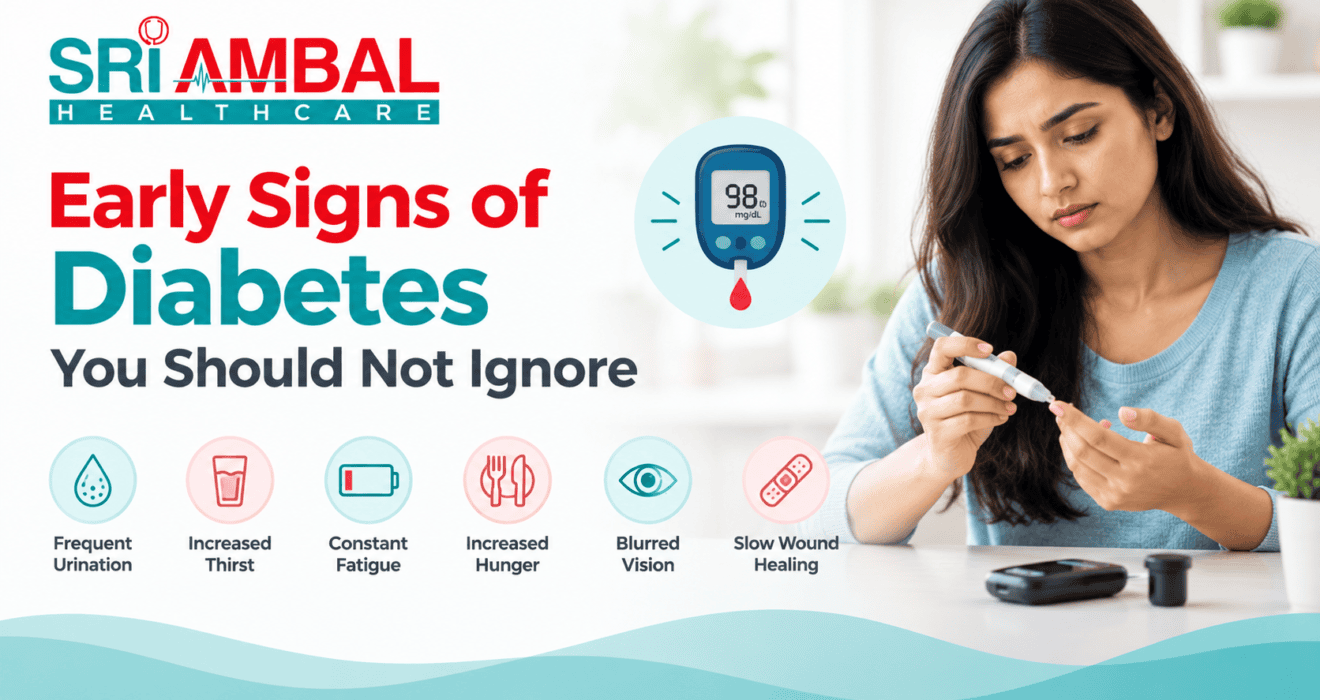
Early Signs of Diabetes You Should Not Ignore
The early signs of diabetes can be easy to overlook because the symptoms may develop gradually. Feeling unusually thirsty, urinating frequently, experiencing constant tiredness, or losing weight without trying may seem like minor concerns. However, these changes can sometimes indicate elevated blood sugar levels.
Feeling unusually thirsty, visiting the bathroom frequently, experiencing constant tiredness, or losing weight without trying may seem like minor concerns. However, these changes can sometimes indicate elevated blood sugar levels.
Recognising the early signs of diabetes and getting tested at the right time can help people understand their health and begin appropriate management. For residents of Ayapakkam, Ambattur, Avadi, and nearby areas of Chennai, knowing where to seek diabetes screening and medical guidance is an important step towards long-term health.
Recognising the early signs of diabetes can help people seek timely medical advice and understand whether blood glucose testing is needed.
Why Recognising the Early Signs of Diabetes Matters
Diabetes develops when the body does not produce enough insulin or cannot use insulin effectively. Insulin is a hormone that helps glucose move from the bloodstream into cells, where it can be used for energy.
When insulin production or function is impaired, glucose levels in the blood can rise above the normal range.
The main types include type 1 diabetes, type 2 diabetes, and gestational diabetes, which develops during pregnancy. Type 2 diabetes is common in adults, although it can also occur in younger people.
Early detection allows healthcare professionals to assess blood sugar levels, recommend suitable treatment, and help reduce the risk of complications affecting the eyes, kidneys, nerves, heart, and blood vessels.
Recognising the early signs of diabetes can help people seek timely medical advice and reduce the risk of complications through appropriate management.
7 Early Signs of Diabetes You Should Not Ignore
1. Frequent Urination
One of the common symptoms of diabetes is needing to urinate more often than usual. When blood glucose becomes too high, the kidneys work to remove excess glucose through urine. This can increase urine production.
You may notice that you visit the bathroom more frequently during the day or wake up several times at night to urinate.
Frequent urination can have other causes too, so it should not be considered proof of diabetes. However, if it continues, particularly alongside increased thirst, it is worth discussing with a doctor.
2. Feeling Extremely Thirsty
Persistent thirst can occur when the body loses more fluid through frequent urination. You may find yourself drinking water more often but still feeling thirsty.
If unusual thirst continues for several days or occurs alongside other possible diabetes symptoms, consider getting your blood glucose levels checked.
Do not ignore persistent thirst simply because you are drinking enough water.
3. Constant Tiredness and Low Energy
Feeling tired after a busy day is normal. However, persistent fatigue that does not improve with adequate rest may require attention.
When blood glucose cannot be used effectively by the body’s cells, you may feel unusually weak or lacking in energy.
Fatigue can also result from anaemia, sleep problems, thyroid disorders, and other conditions. A medical evaluation can help identify the underlying cause rather than assuming that diabetes is responsible.
4. Unexplained Weight Loss
Losing weight without changing your diet or activity levels can sometimes be an early sign of diabetes.
When the body cannot use glucose effectively, it may begin breaking down stored fat and muscle for energy. This can contribute to unintended weight loss.
Sudden or unexplained weight loss should be evaluated by a healthcare professional, especially when accompanied by increased thirst, frequent urination, or unusual fatigue.
5. Blurred Vision
High blood glucose levels can affect the fluid balance in the eye and temporarily change vision. You may notice that your eyesight becomes blurry or that focusing on objects feels more difficult.
Blurred vision can have many causes, and sudden vision changes should never be ignored. Arrange a medical assessment if the problem persists, and seek urgent care for sudden or severe vision loss.
Regular eye examinations are also important for people diagnosed with diabetes because prolonged high blood sugar can damage the blood vessels in the retina.
6. Slow-Healing Cuts and Frequent Infections
If small cuts or wounds take longer than expected to heal, it may be worth checking for underlying health concerns.
High blood glucose can interfere with normal healing and affect the body’s ability to fight infections. Some people with diabetes also experience recurrent skin infections, urinary tract infections, or fungal infections.
These symptoms do not automatically mean that someone has diabetes. However, repeated infections or slow-healing wounds deserve medical attention.
7. Tingling or Numbness in the Hands and Feet
A tingling, burning, or numb sensation in the hands and feet can occur when nerves are affected by prolonged high blood sugar.
This type of nerve damage, known as diabetic neuropathy, is more commonly associated with diabetes that has been present for some time. Nevertheless, nerve symptoms should be assessed rather than ignored.
Seek medical advice if you experience persistent tingling, reduced sensation, or unexplained pain in your feet or hands.
Early Signs of Diabetes: Who Should Get Tested?
Diabetes can affect people of different ages and body types. You may benefit from discussing diabetes screening with a doctor if you experience possible symptoms or have risk factors such as:
- A family history of diabetes
- Having a higher body weight or excess abdominal fat
- Limited physical activity
- High blood pressure
- Abnormal cholesterol levels
- A history of gestational diabetes
- Previous high blood glucose results
Even if you feel healthy, routine screening may be appropriate depending on your age, medical history, and individual risk factors.
The absence of symptoms does not rule out type 2 diabetes, as the condition can develop gradually.
Some early signs of diabetes may appear alongside these risk factors, but testing is important because type 2 diabetes can also develop without noticeable symptoms.
Tests to Detect Diabetes Early
A doctor may recommend one or more blood tests to assess glucose levels.
Fasting blood glucose test: Measures blood glucose after an overnight fast. A result of 126 mg/dL or higher is within the diabetes diagnostic range and generally requires confirmation according to clinical guidelines.
HbA1c test: Estimates average blood glucose over approximately two to three months. An HbA1c result of 6.5% or higher is within the diabetes diagnostic range.
Oral glucose tolerance test: Measures how the body processes glucose after drinking a standard glucose solution.
Random blood glucose test: Measures glucose without requiring fasting. In a person with classic diabetes symptoms, a result of 200 mg/dL or higher may meet diagnostic criteria.
A healthcare professional will interpret the results in context and determine whether repeat testing is necessary. A single abnormal reading should not always be interpreted without considering the individual’s clinical situation.
People searching for a diabetes test in Ayapakkam or a blood sugar test near Ambattur can contact a healthcare facility to enquire about suitable testing options.
How to Reduce Your Risk of Type 2 Diabetes
Although not every case of diabetes can be prevented, healthy lifestyle habits can help reduce the risk of type 2 diabetes and support overall health.
Choose balanced meals that include vegetables, whole grains, pulses, and appropriate sources of protein. Limit frequent consumption of sugary drinks and highly processed foods.
Regular physical activity can also help improve how the body uses insulin. Choose activities that suit your fitness level and medical condition, and aim to remain active throughout the week.
Maintaining a healthy weight, getting adequate sleep, and attending recommended health check-ups can further support long-term well-being.
If you already have elevated blood glucose, consult a healthcare professional about an appropriate monitoring and management plan.
Diabetes Screening and Care at Sri Ambal Healthcare, Ayapakkam
Early assessment is important when you notice possible diabetes symptoms or have risk factors for elevated blood glucose.
Sri Ambal Healthcare in Ayapakkam, Chennai, offers general medicine services and has a consultant diabetologist. Patients can enquire about diabetes screening, blood glucose testing, medical consultation, and ongoing management based on their individual needs.
For people living in Ayapakkam, Ambattur, Avadi, and surrounding Chennai areas, accessing medical advice close to home can make it easier to discuss symptoms and understand the next steps.
If you have persistent thirst, frequent urination, unexplained weight changes, or other possible symptoms, consider contacting Sri Ambal Healthcare to enquire about an appropriate medical assessment.
Frequently Asked Questions
What are the first warning signs of diabetes?
Common symptoms include frequent urination, increased thirst, unusual tiredness, unexplained weight loss, and blurred vision. Some people with type 2 diabetes have no obvious symptoms.
Can diabetes develop without symptoms?
Yes. Type 2 diabetes may develop gradually over several years without noticeable symptoms. Screening can help identify elevated blood glucose in people who feel well.
Which blood test is best for detecting diabetes?
Fasting blood glucose, HbA1c, and oral glucose tolerance testing are commonly used. The most suitable test depends on your symptoms, medical history, and your doctor’s recommendation.
Where can I get a diabetes test in Ayapakkam?
Sri Ambal Healthcare in Ayapakkam provides general medicine services and laboratory facilities. Contact the hospital to confirm available blood tests and appointment details.
Can early diabetes be managed with lifestyle changes?
Lifestyle changes are important for managing type 2 diabetes and may help some people improve their blood glucose levels. However, treatment needs vary, and medication may also be necessary. Do not stop prescribed medicines without medical advice.
If you notice possible early signs of diabetes, consult a healthcare professional for an appropriate assessment and advice on testing.
Conclusion
The early signs of diabetes can be easy to overlook because they may develop gradually or resemble everyday health concerns. Persistent thirst, frequent urination, unusual fatigue, unexplained weight loss, and blurred vision are reasons to consider medical evaluation.
Early diagnosis can help you understand your blood glucose levels and take appropriate steps to protect your long-term health.
If you notice possible early signs of diabetes, consult a healthcare professional to discuss appropriate blood glucose testing and next steps.
If you live in Ayapakkam, Ambattur, Avadi, or nearby Chennai areas and are concerned about possible diabetes symptoms, contact Sri Ambal Healthcare to enquire about diabetes screening and medical consultation. Timely assessment and an appropriate care plan can help you manage your health more confidently.